Phone, 4K, 30 fps, horizontal unless the rule says vertical.
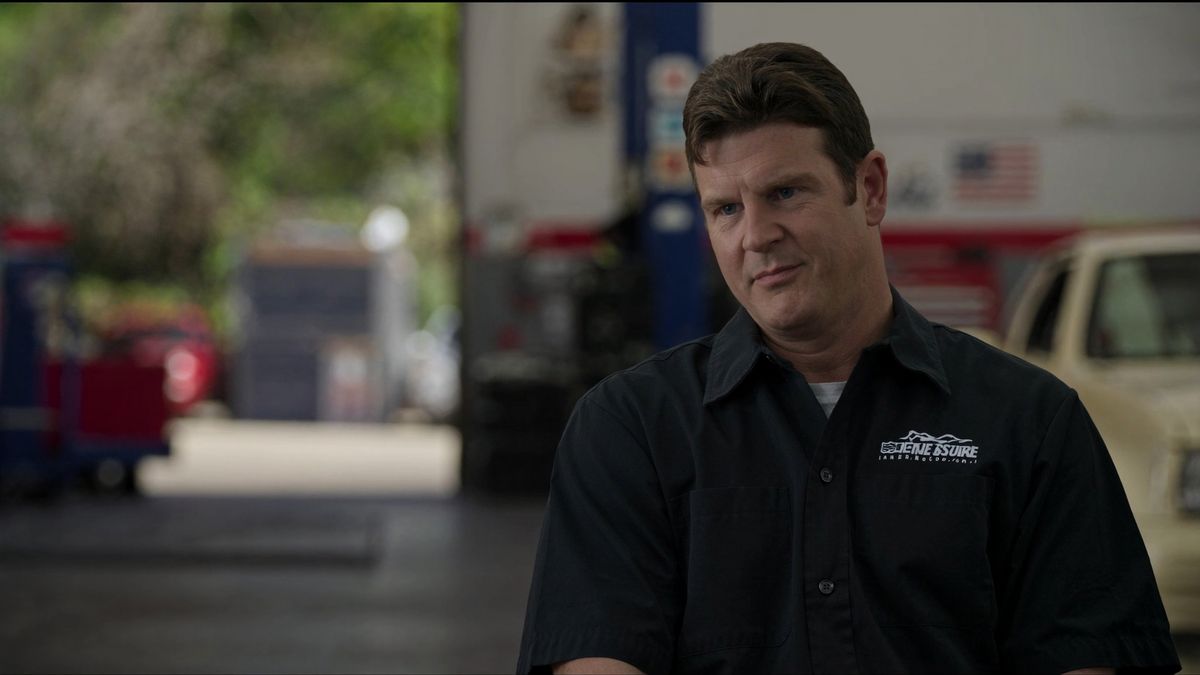
Rule of thirds.Eyes on the top line, face on a side line, never dead centre. It reads as a film, not a video call.
Eye level.Lens at the owner's eye height, sitting. Looking up makes them small, looking down makes them a suspect.
Face the window, not the bay door.Light behind the phone, on the owner's face. Light behind the owner is a silhouette the phone cannot fix.
Lock exposure and focus.Tap and hold on the face until the lock shows. A car passing the door makes an unlocked phone pump brighter and darker mid-answer.
Horizontal, always.Interview and B-roll are filmed horizontal 4K. The shorts are cropped vertical from the Sony later, so keep the owner's head and shoulders well inside the frame. B-roll also gets one vertical take of the shots the list marks.
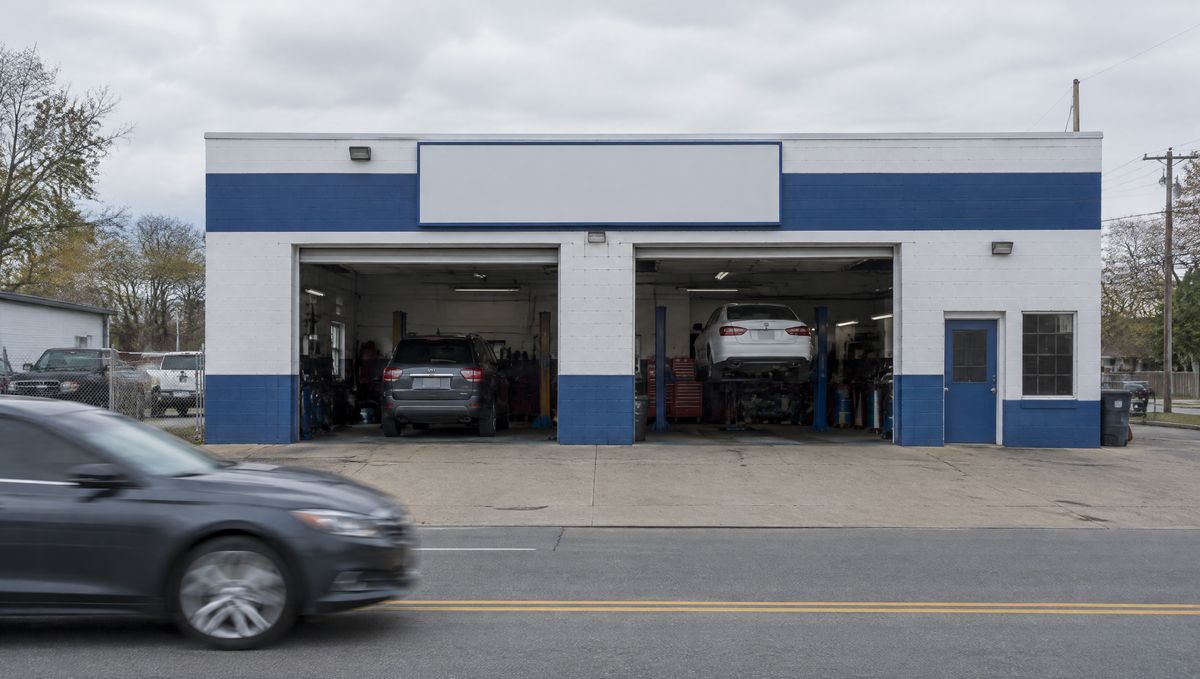
Foreground, subject, background.Put something between the phone and the subject: a passing car, a doorframe, the edge of a tool rack, a bumper. Three layers read as three-dimensional. A flat frame reads as a snapshot.
Never zoom. Walk.Zoom stays at 1x. Want closer? Step closer. Phone zoom is a crop and it turns to mush.
Hold still, count it.Wide shots 10 to 15 seconds. Every other B-roll shot 5 seconds at least. Dead still for 3 seconds at the start and the end: those still frames are the photos. The edit needs 3 to 5 clean seconds from the middle, and the first and last seconds are always a wobble.
Record room tone.Thirty seconds of silence in the interview spot, phone rolling, nobody moving. The edit needs it to hide every cut.
Two copies every night.Everything onto the laptop and the SSD before you sleep, two clips played from the SSD, counts matched. Only then is a card cleared. Then the review set into that day's Drive folder: the phone's interview take, the testimonial, ten B-roll clips. Joseph goes through it and sends notes for the next shop.
The camera split, one Sony plus phones: during the interview the Sony is the main shot and the phone on tripod two is the second angle, both on the owner (Guide, Set-up). After the interview the phone does the B-roll, the team photo and the testimonial. Same rules on both.
One-hour shop (Rancho Express, Strictly German): arrive 5, set up 10, interview 25 with questions 1, 3, 5, 7, 9, 11, pick-ups 3, B-roll 8 with shots 3, 5, 6, 8, 12, team photo and testimonial 4, pack 5. Set-up is ten minutes only because it was rehearsed at the hotel.
Interview set-up
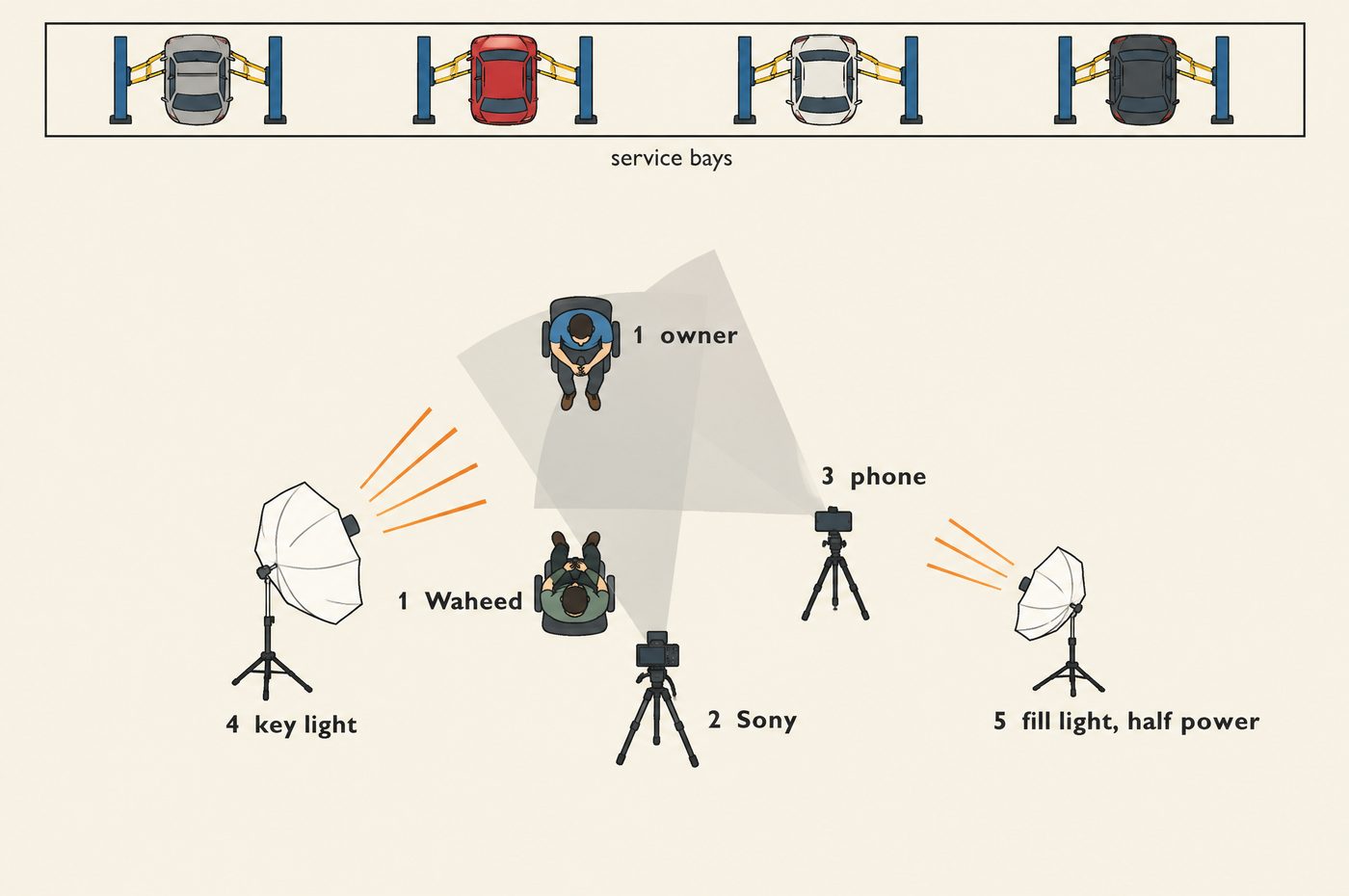
Two cameras, both on the owner, both on the same side of the conversation. The Sony is the main shot; the phone is a second angle the editor cuts to.
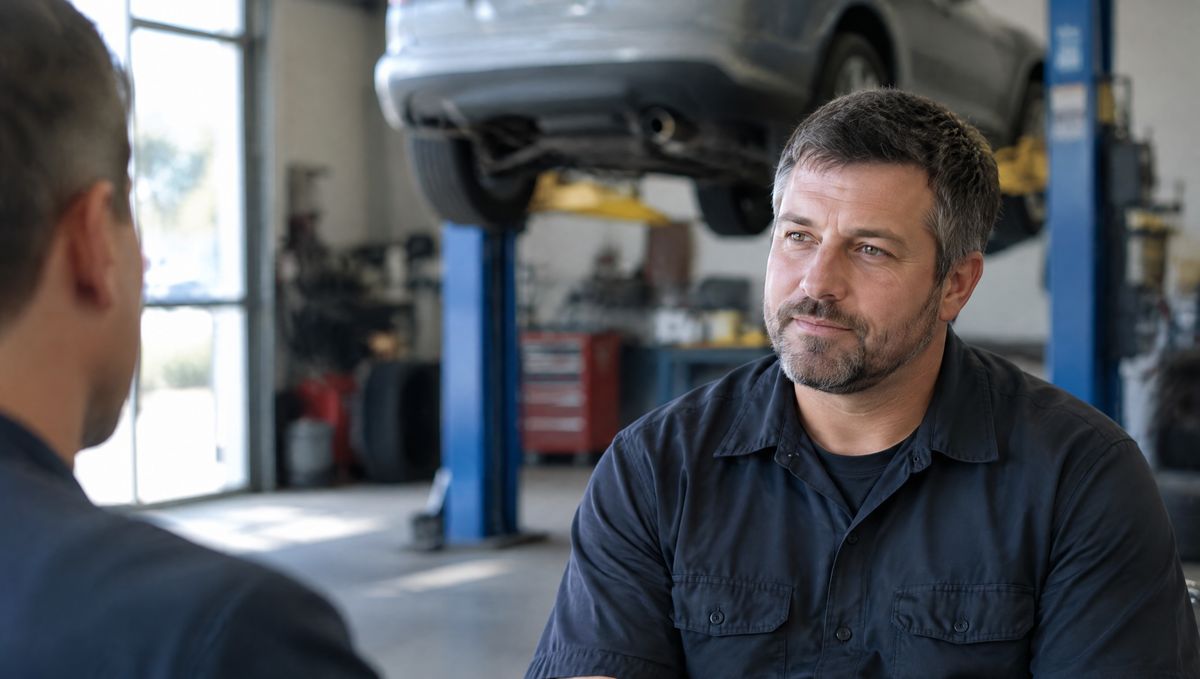
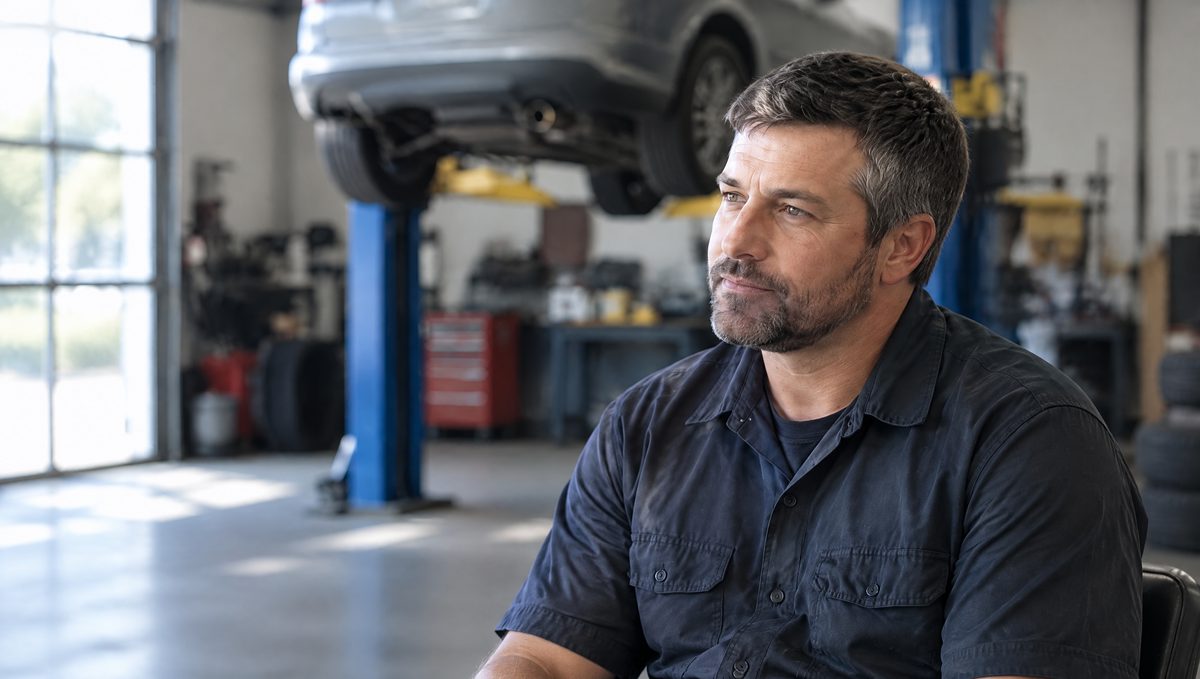
From above. Numbers match the rows below. Neither camera sees a light stand or the other camera. Distances are starting points.2 · What the Sony sees. It stands beside Waheed and looks past him, so the owner talks just off the lens. Chest up, on the right third, looking left at Waheed; at most a soft edge of his shoulder in the corner. The shorts are cropped vertical from this shot.3 · What the phone sees. The same owner from his side, waist up, still looking left. When an answer gets trimmed, the edit cuts here so the jump never shows.
Owner and WaheedTwo chairs facing each other, 1.2 m apart. They talk to each other, never to a camera.
Sony, the main shotBeside Waheed's shoulder, looking past him at the owner, 1.5 m away, lens at his eye level. Chest up, air above the head, owner on the right third. 4K, horizontal. LARK receiver in its mic jack, monitor on top.
Phone, the second angleTripod two, on the same side as the Sony but further round: about 1.5 m from the owner, at his side. Horizontal, waist up. Airplane mode, its own sound on for syncing.
Key light, the main lightThe first umbrella, on the far side of the owner's face (the side away from both cameras), 45 degrees off his nose, 1.5 m away, a little above eye level, tilted down. This light gives the face its shape.
Fill light, half powerThe second umbrella behind the cameras, 2.5 m from the owner, half power. It only softens the shadow the key leaves; it must stay weaker than the key.
MicA LARK M2 transmitter on each of them, clipped at the second button, within 30 cm of the mouth. Level set so a loud laugh does not clip. LARK fails: the phone's own sound is the backup.
Key light and fill light
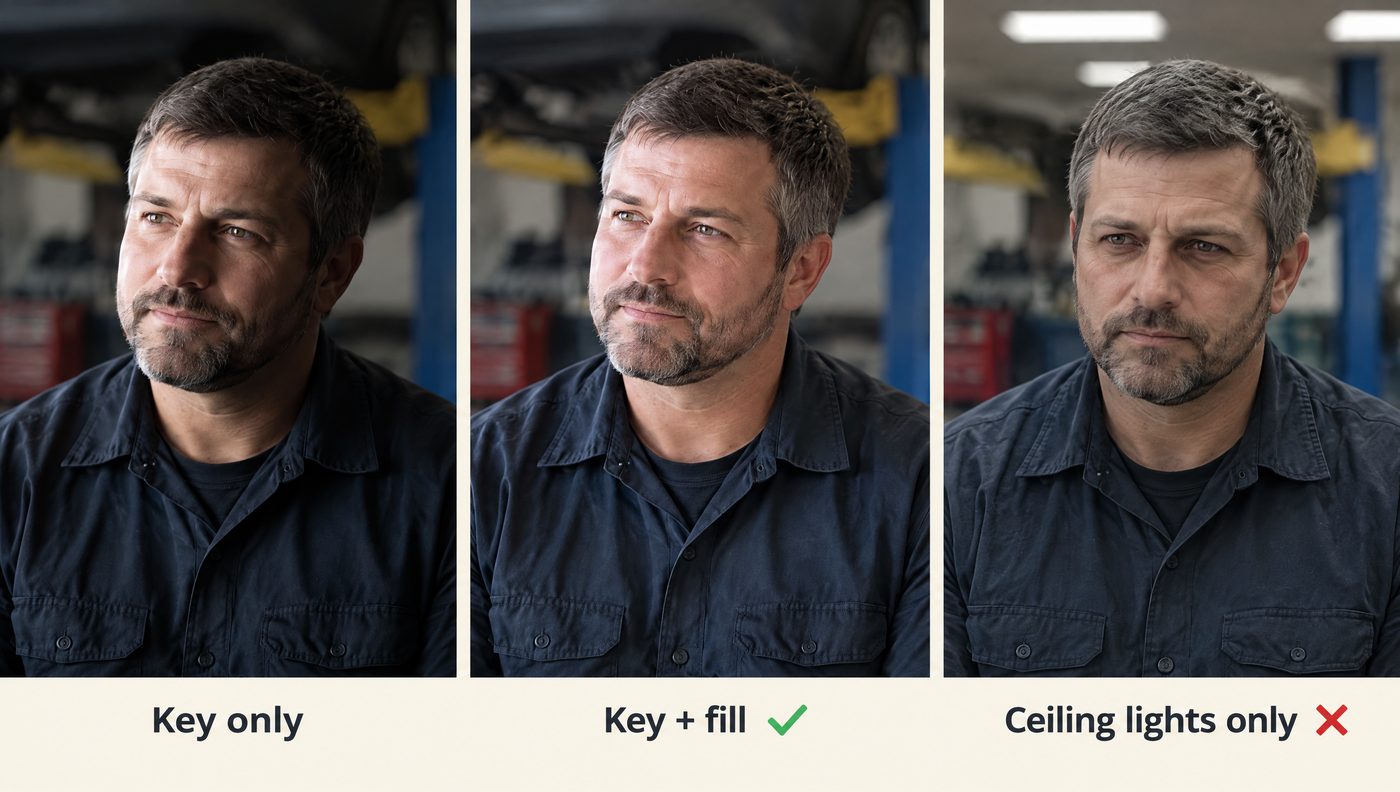
The same face, three ways. The key does the work. The fill only lifts the dark side. Shop ceiling lights alone make a flat, tired face.
Key: the main lightThe brightest light, close (1.5 m), to the side at 45 degrees, a little above the eyes. One side of the face bright, the other side darker: that difference is what looks like film.
Fill: the helper lightHalf the brightness, further away (2.5 m), from the other side. Turn it up until the dark side shows detail, then stop. If both sides look equal, the fill is too strong.
Check on the monitorKey on alone first, then add the fill. Shop ceiling lights above the chairs off if the switch is near. A window on the key side does the key's job: use it.
Wide of both, at the end. A camera that sees both faces always sees the lights too, so there is no wide during the interview. After the last question, pull the phone back for 60 seconds of both of them talking, lights in frame. That clip is the behind-the-scenes shot.
Loud bay. Shut the roller door. Ask for the impact gun to rest for 45 minutes. If it cannot, both chairs into the office with one tool cart as the background. Room tone recorded there.
Always. Airplane mode on both. Lenses wiped. Watch and chair legs out of frame. No big other-brand logo on the owner's shirt. The bays 3 m or more behind the owner, nothing growing out of his head. Slate before question one: name, spelled, shop, city, job.
What comes home
Six things leave every shop. Everything on this tab exists to feed one of them; the tag on each shot says which.
The masterclass episodeThe interview, horizontal on the Sony, 45 to 55 minutes raw. Questions 1 to 12 in order.
The case studyA different video, filmed later in the office with Waheed. The trip supplies what it cuts to: the shop B-roll (shots 1 to 12), the owner's before-and-after answers (questions 2, 4, 5 and 11) and every number said on tape.
ShortsFive to eight per shop, cut from the interview and from the case study. The vertical takes of the owner and of the B-roll are what make them possible.
Ten photosFrame grabs from the 3-second holds. Nothing extra to shoot.
The team photoOwner and crew under the sign, one version with Waheed and Andre in it.
The testimonial30 to 60 seconds, owner to camera, vertical, two takes.
Shot list
Every subject gets a wide take and a tight take: wide from far back, 10 to 15 seconds, something in the foreground; tight by walking in close, 5 seconds or more. Add a slow move (a push or a walk) where the list says so. Never under 5 seconds, 3-second still at each end, horizontal first. "For" says what it feeds.
1 · Sign and front, wide. From across the street, the whole front, sign in the top third, 10 to 15 seconds. Wait for one or two cars to pass through the foreground. All
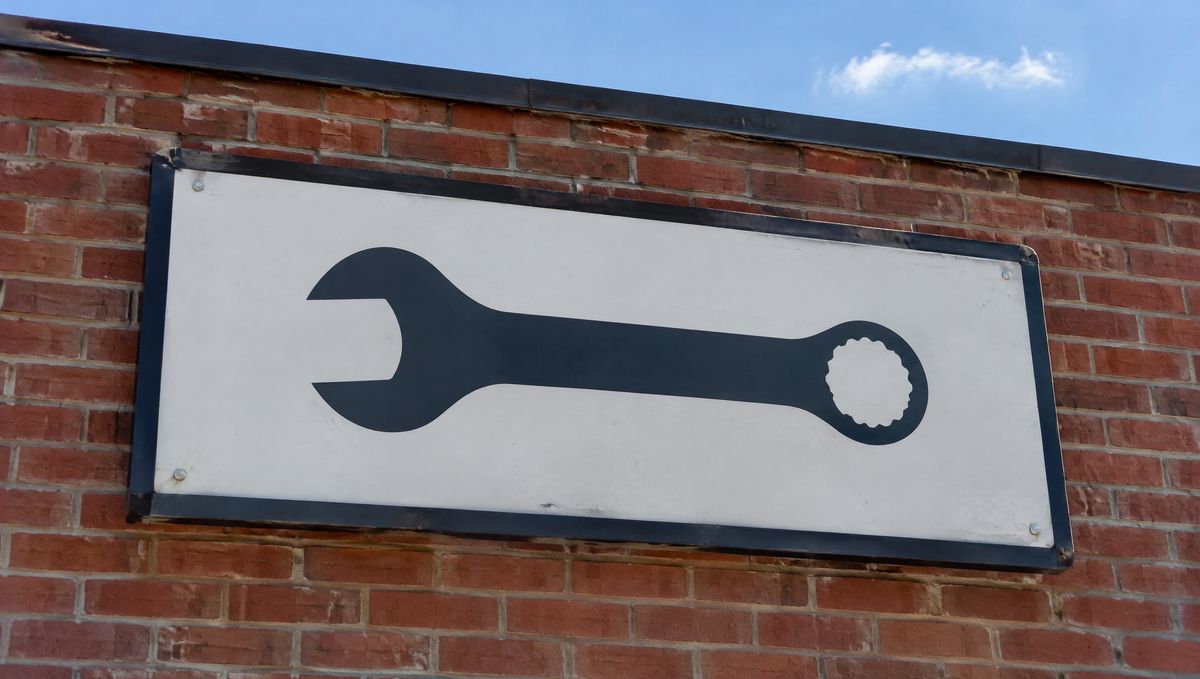
2 · Sign, tight and the push. Walk in close on the sign, 5 seconds still. Then from 3 m, a slow walk towards it for 10 seconds, phone at chest, steady. Long form · Photo
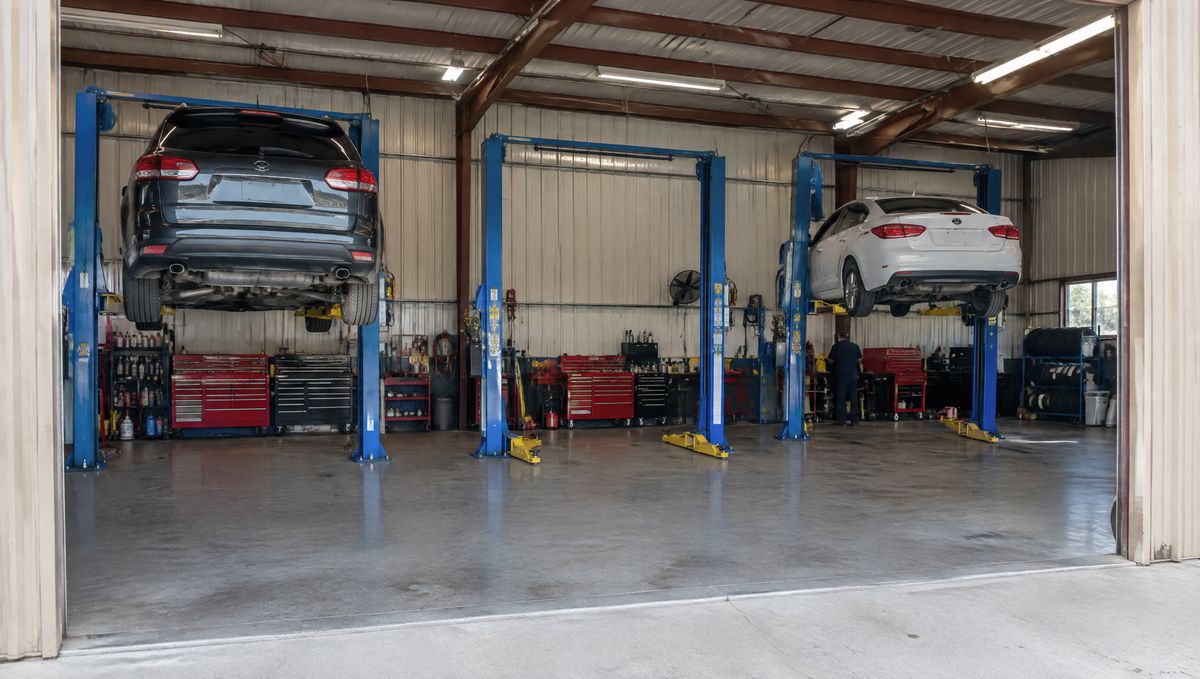
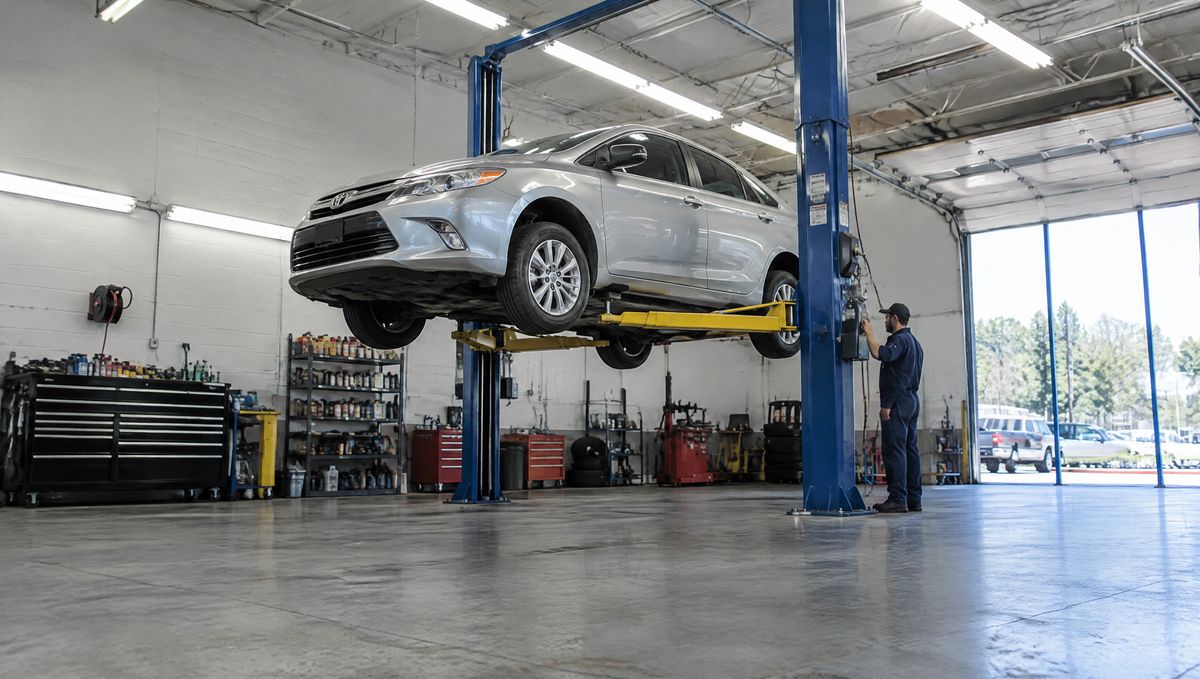
3 · Bays wide. From the roller door, every lift in frame, hip height. All
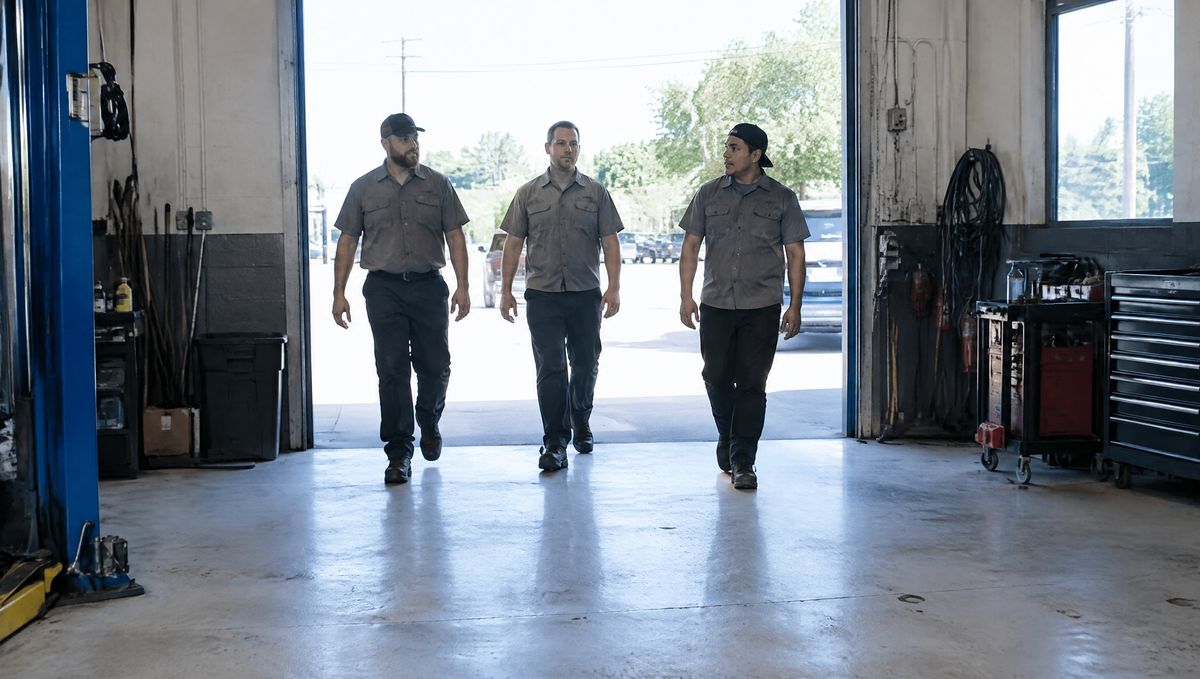
4 · Team walking in. From the bay towards the door as the crew comes in, or restaged. All
5 · Owner at work. Under a car or at a screen, not looking at the phone, 20 seconds. All
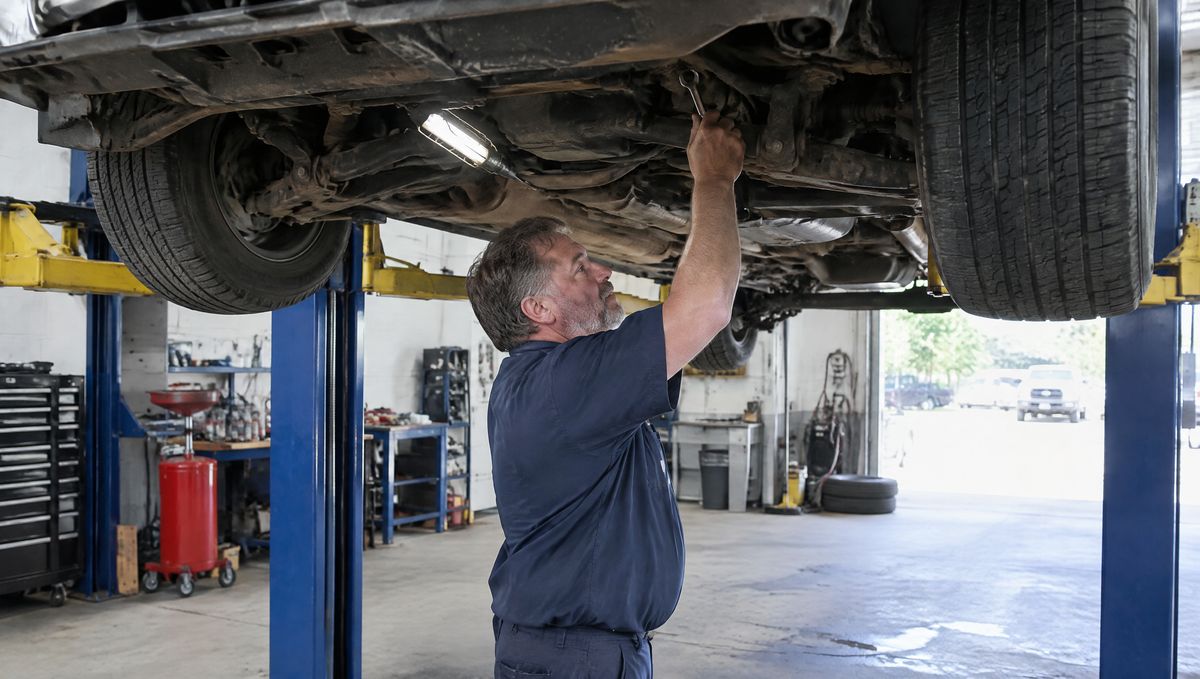
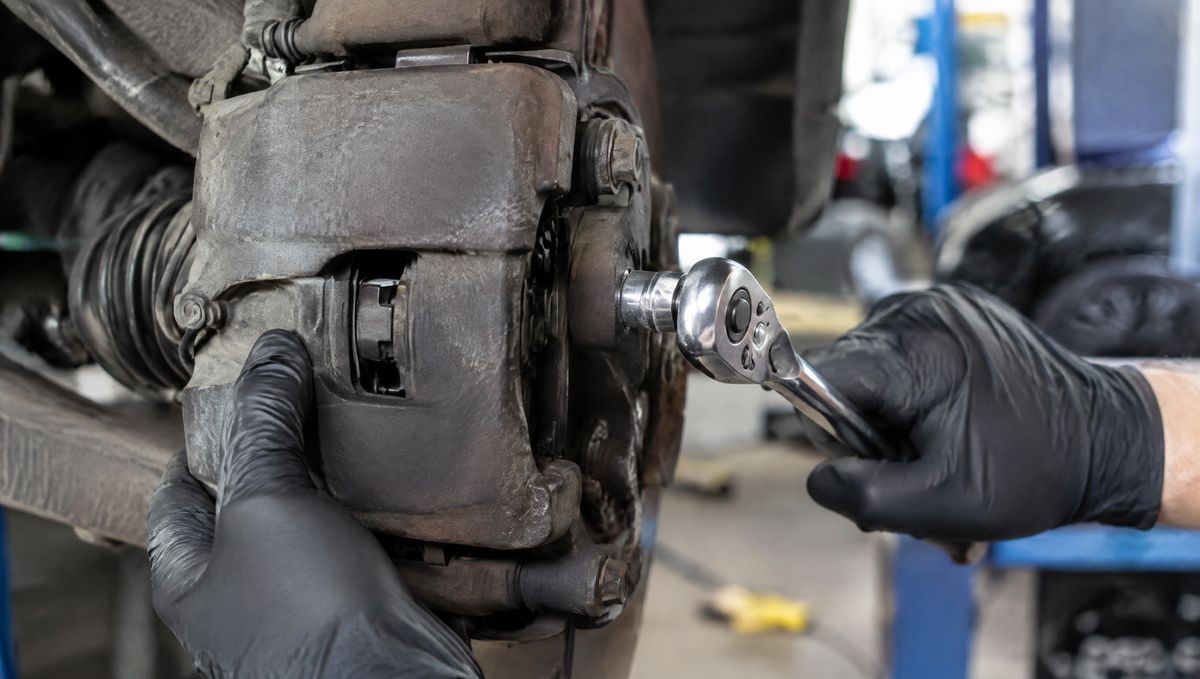
6 · Hands on a job. Close on hands and the part, 40 cm away, hold still. Short · Photo
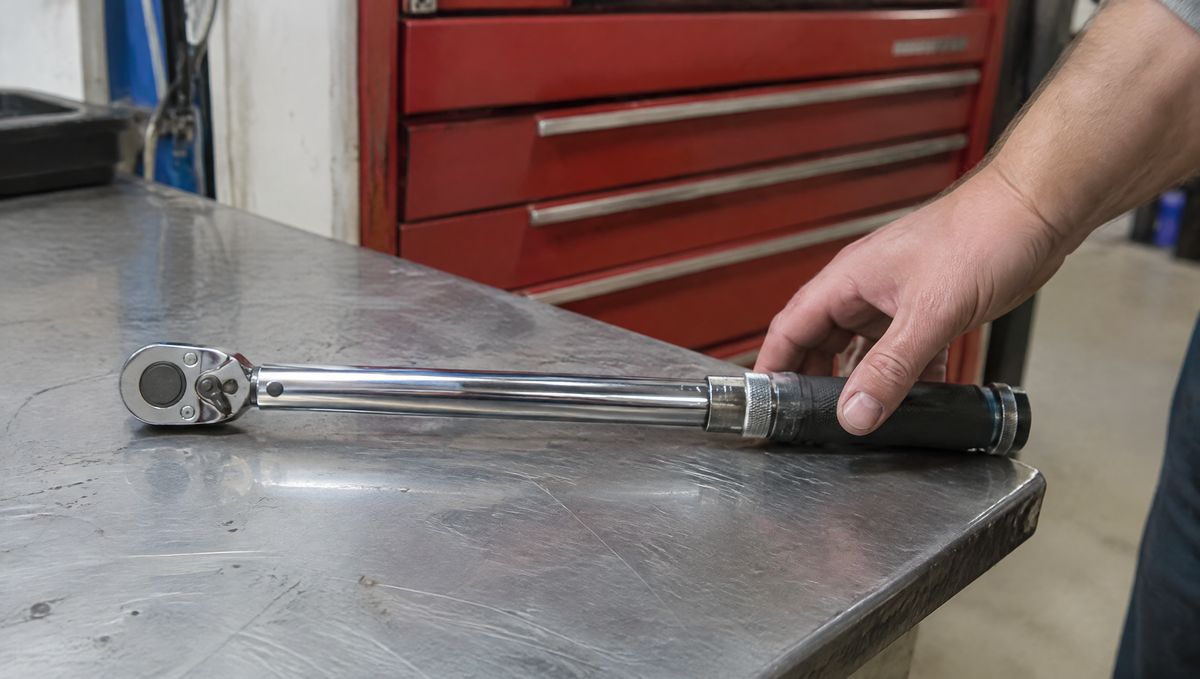
7 · Tool close-ups. Three tools, 10 seconds each, phone still, hands enter the frame. Short
8 · The lift going up. Low, wide, the whole car rising. Ask for it. All
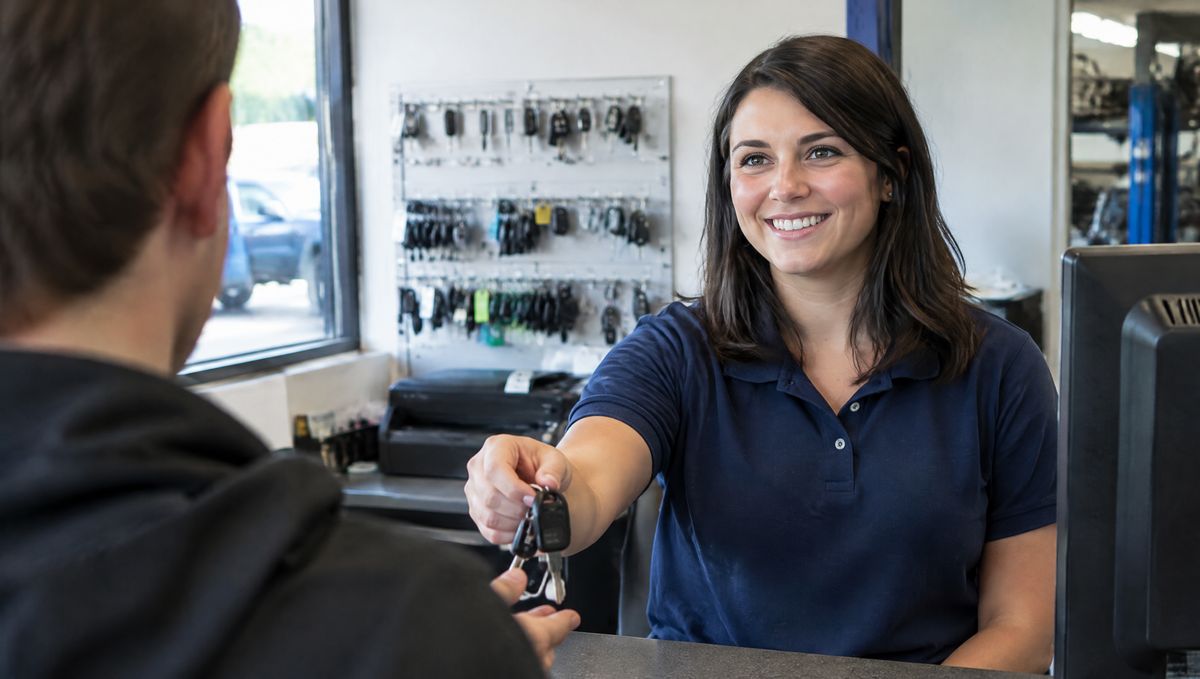
9 · Counter and greeting. Over the customer's shoulder at the front desk, restaged with a tech if quiet. Long form · Photo
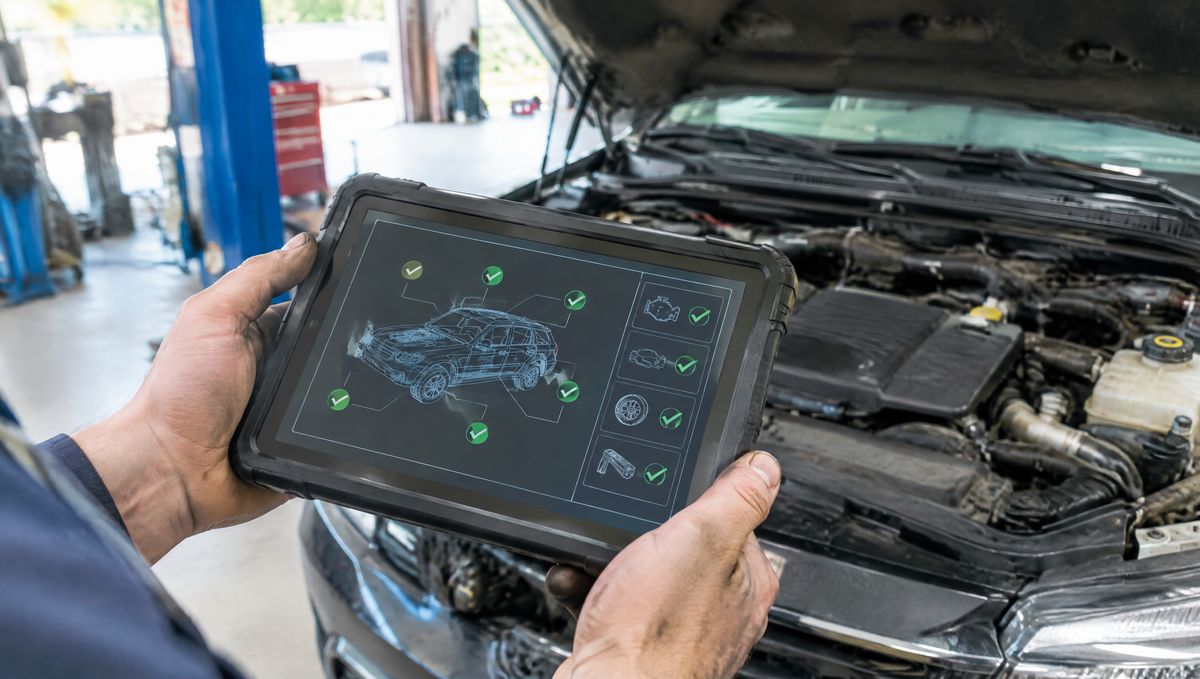
10 · Screens or software. Booking screen or inspection tablet, close, no customer names. Long form
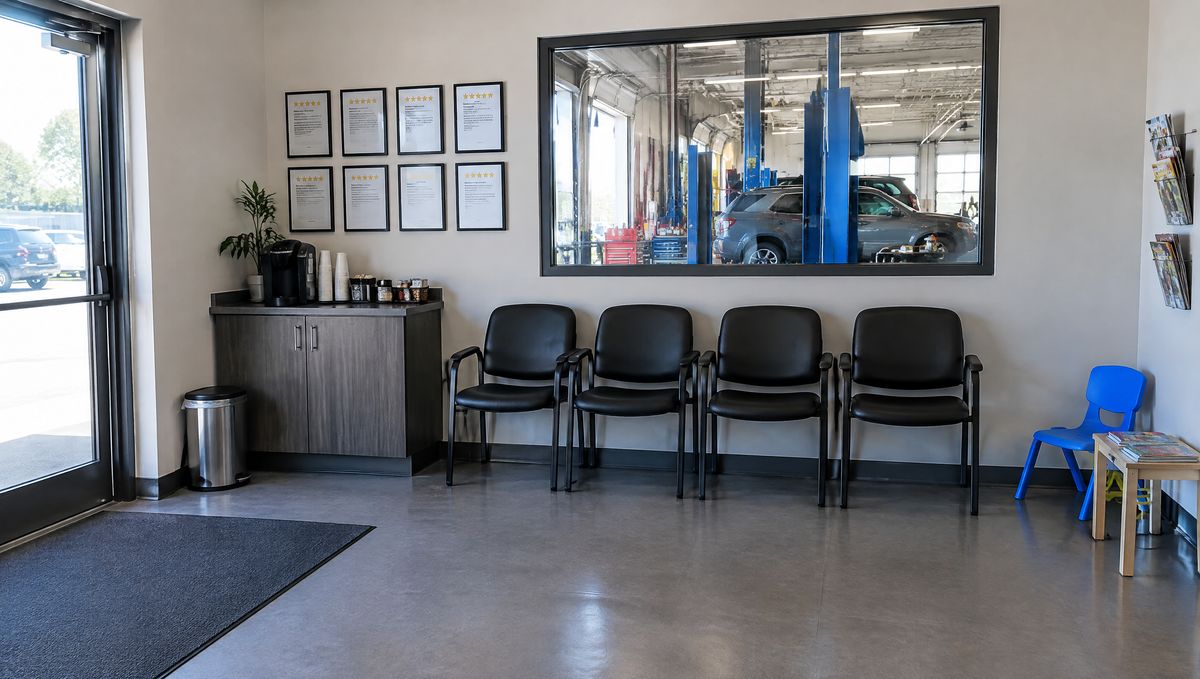
11 · Waiting room. Wide from the door, then one detail: coffee, the kids' chair, reviews on the wall. Photo · Long form
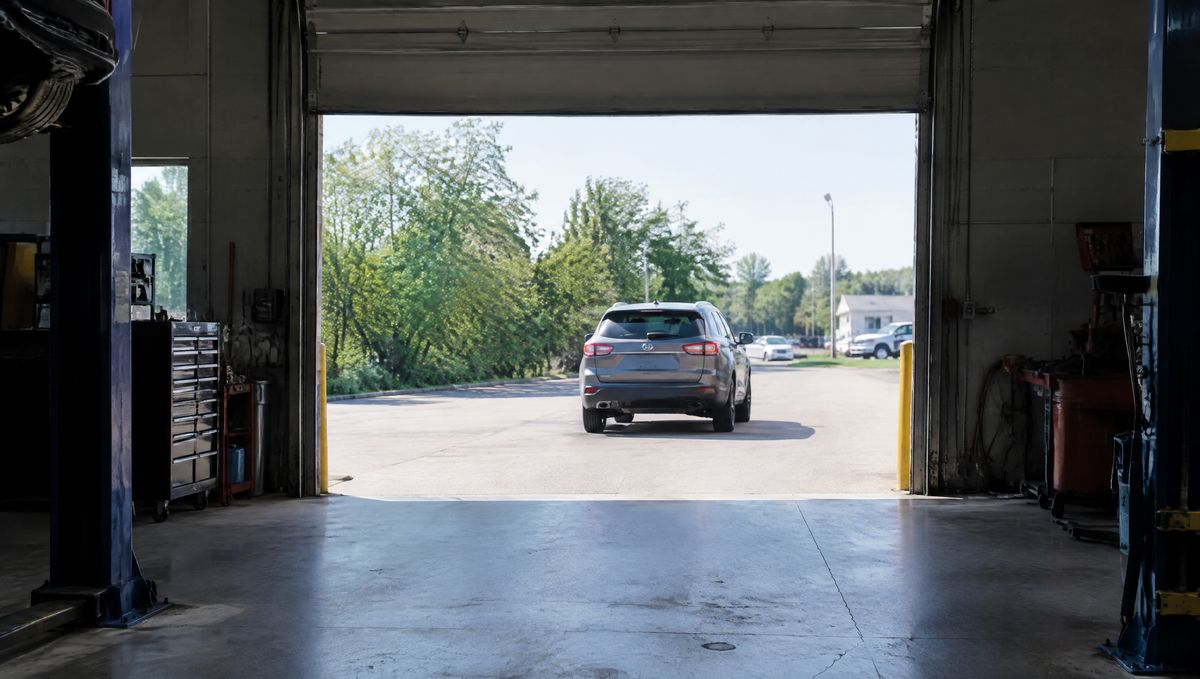
12 · A car leaving. From inside the bay looking out as a finished car drives off, 15 seconds. All
Interview coverage
Sony: the owner\'s main shot, the whole interview, horizontal 4K; the shorts are cropped from it. Phone on tripod two: the second angle on the owner, the whole interview. After the last question: 60 seconds wide of both (lights in frame, the behind-the-scenes clip), Waheed close 60 seconds, the three best questions re-asked on Waheed.
Vertical takes
Shots 1, 3, 5, 6, 8 and 12 get a second vertical take. The rest are cropped from 4K.
Where the ten photos come from
The 3-second holds of shots 1, 3, 5, 6, 8, 9, 11 and 12, plus the team photo and the three stills. Ten is the floor.
The interview
Let silence sit three seconds after every answer: the best line comes after the pause. Ask them to put the question in the answer ("The biggest mistake I made was..."). Story stops early? "And then what happened?" Never finish their sentence.
Orange numbers stand alone as a short. Before question one, the slate: "Say and spell your name, the shop, the city, your job."
Origin
1
How did you end up owning a shop? What was day one like?
2
What did the shop look like then: how many bays, how many people, how many cars a week?
The turning point
3
What was the moment you knew you had to run it differently?
Short
4
What did you change first, and what happened in the three months after?
The numbers they are proud of
5
What number are you proudest of today? Bays, cars a week, team size, whatever you track.
Short
6
Walk me through a good week now, Monday to Friday.
The mistakes
7
What is the most expensive mistake you made as an owner?
Short
8
What do you say no to now that you used to say yes to?
Advice to another owner
9
An owner with two bays and no time asks you how to grow. What do you tell them?
Short
10
What do most shop owners get wrong about getting customers?
Working with New Limits (last, short)
11
What was the marketing like before you worked with us, and what changed?
Short
12
What would you say to an owner thinking about working with us?
Twelve questions at 4 to 5 minutes each is the 55-minute block. Owner short on words: go deeper on 2, 6 and 10. Owner long: drop 8 and 10.
The kit
Phone plus window light is enough. Everything below makes it easier. Nothing below is a reason not to shoot.
Must-have
Phone100 GB free, charged. One shop is about 20 to 30 GB of phone footage at 4K 30.
Lav mic, or a wired mic into the phoneThe interview audio. The phone's own mic from 2 m is a bad room.
Small tripod or clampThe interview and every still shot. Hands shake, tripods do not.
One LED panel, or a windowThe owner's face. One is enough.
Power bank and cableTwo hours of 4K eats a battery.
2 TB SSD or the laptopThe back-up before leaving.
Lens clothA smudge is a haze on every shot.
Gaffer tapeCables down, lav cable flat, a chair marked on the floor.
EarphonesTo hear the audio test. Without them a dead lav is found at home.
Nice-to-have
Second phoneThe second angle on the owner through the whole interview, on tripod two.
Second LEDFill from the other side at half power, or a rim light on the hair.
Reflector, or white foam boardBounces the window back into the shadow side of the face.
Spare lav battery, or a second lav for Waheed
The actual kitFrom the Equipment tab of the US visitors list sheet, November 5, 2026. One camera, plus the phones.
Sony DSLR, 128 GB cardThe interview, on a tripod with the monitor. 128 GB is about 2.8 hours of 4K at 100 Mbps: two shops a day fits, offload every night.
External monitorAndre watches the frame and the audio bars here, not on the camera's back screen.
Hollyland LARK M2Two clip-on transmitters, one receiver. Owner wears one, Waheed the other. Receiver into the Sony's mic jack. Charge the case nightly.
2 shoot-through umbrellas with lightsOne is the key at 45 degrees. The other is fill from the far side at half power, or a rim behind the owner's shoulder.
2 DSLR tripodsOne under the Sony. One holds the phone for the second angle during the interview.
1 iPhone tripodThe B-roll still shots and the testimonial.
Still to addNot on the sheet yet.
Spare Sony batteriesOne battery is about an hour of 4K. Two shops a day needs three.
Second 128 GB card, or laptop plus SSDThe nightly offload. Without it day two has no room.
Power bank, lens cloth, gaffer tape, earphonesPhone, haze, cables, the audio test.
3.5 mm cable for the LARK receiverReceiver to the Sony mic jack.
Heat test at the hotelRecord 60 minutes continuous 4K before the first shop. Some Sony bodies stop from heat.
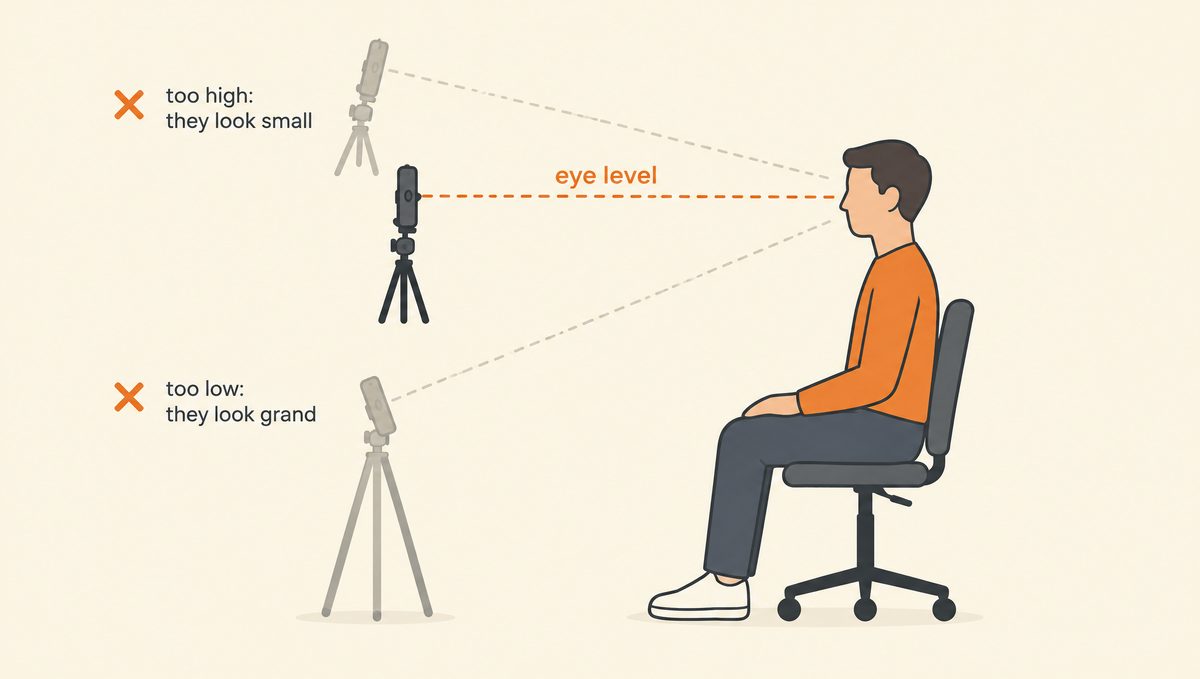 Eye level.Lens at the owner's eye height, sitting. Looking up makes them small, looking down makes them a suspect.
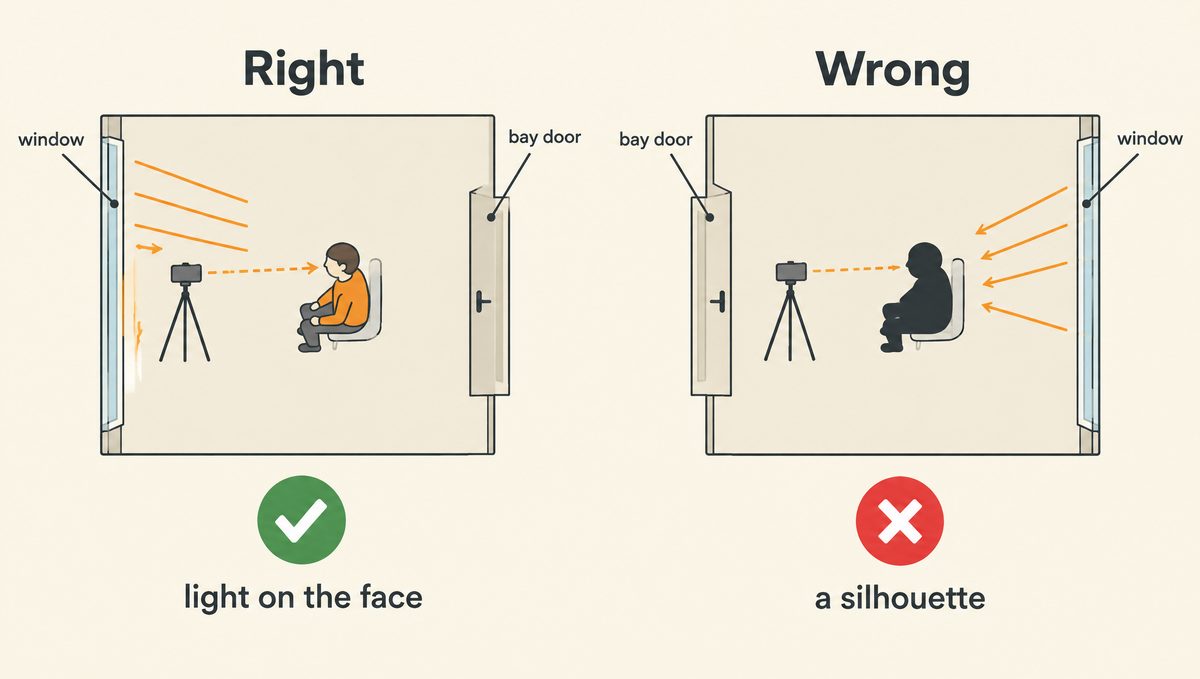 Face the window, not the bay door.Light behind the phone, on the owner's face. Light behind the owner is a silhouette the phone cannot fix.
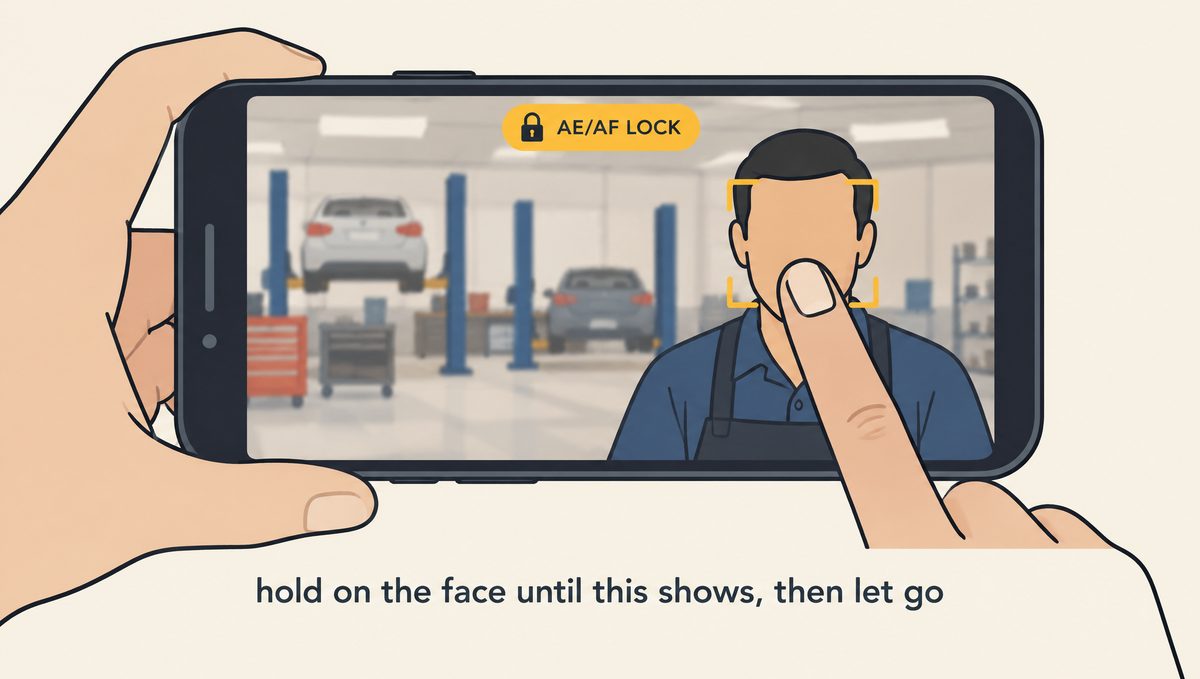 Lock exposure and focus.Tap and hold on the face until the lock shows. A car passing the door makes an unlocked phone pump brighter and darker mid-answer.
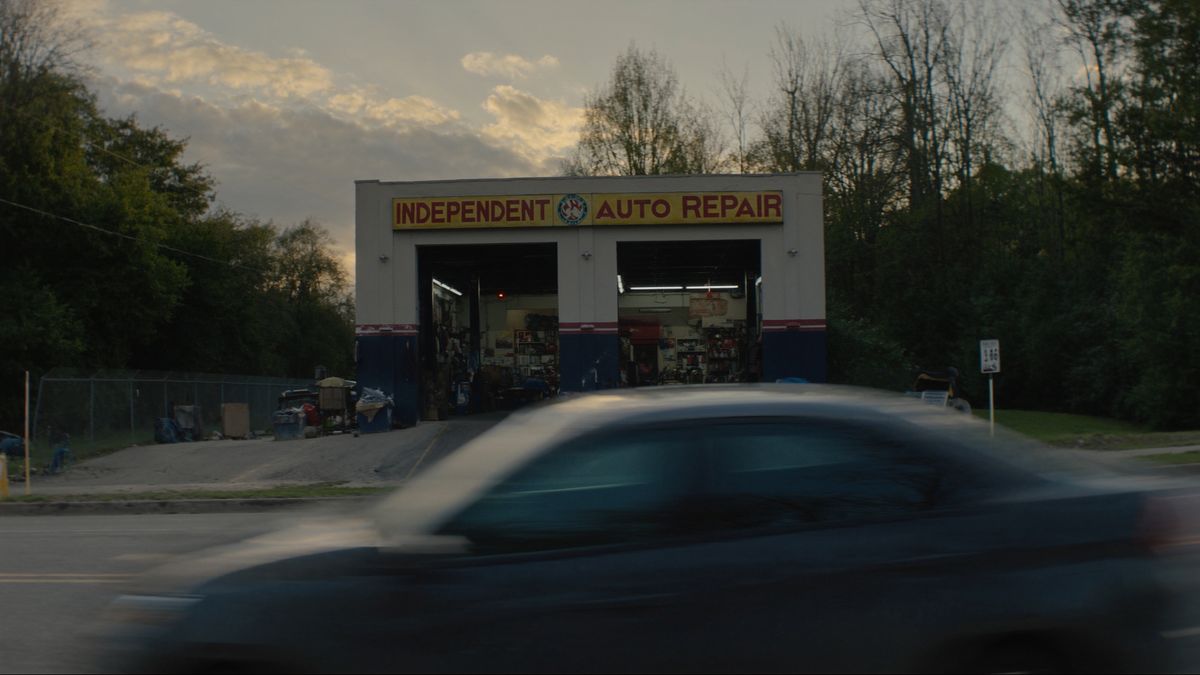 Foreground, subject, background.Put something between the phone and the subject: a passing car, a doorframe, the edge of a tool rack, a bumper. Three layers read as three-dimensional. A flat frame reads as a snapshot.
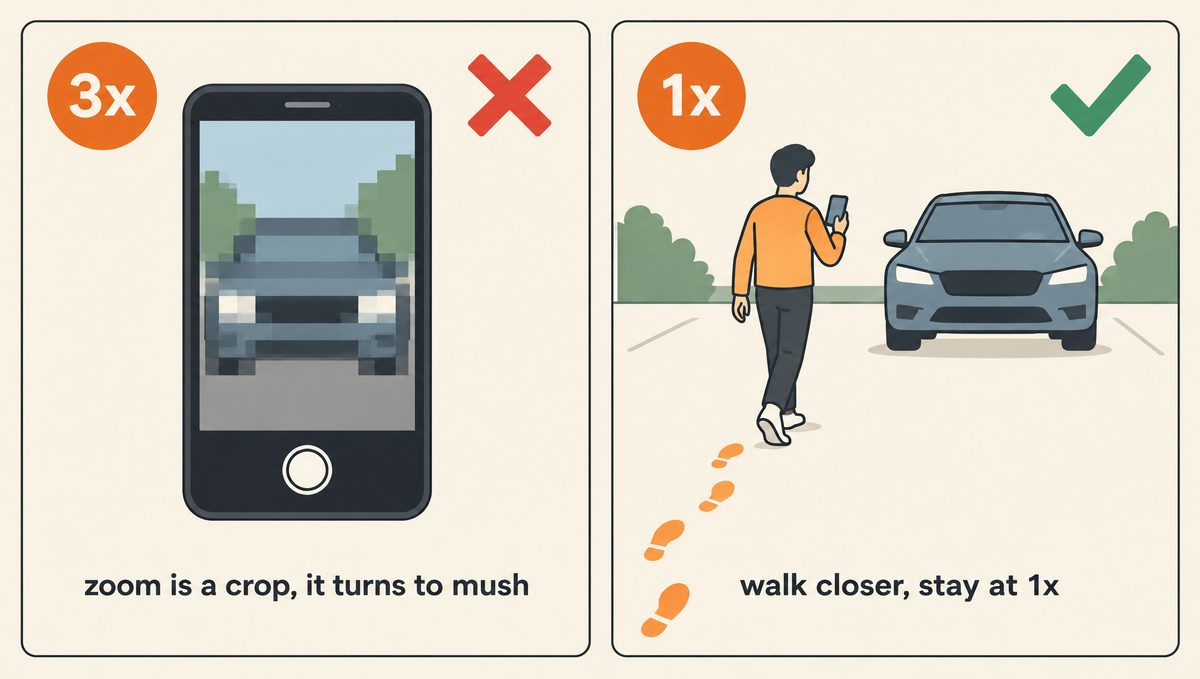 Never zoom. Walk.Zoom stays at 1x. Want closer? Step closer. Phone zoom is a crop and it turns to mush.
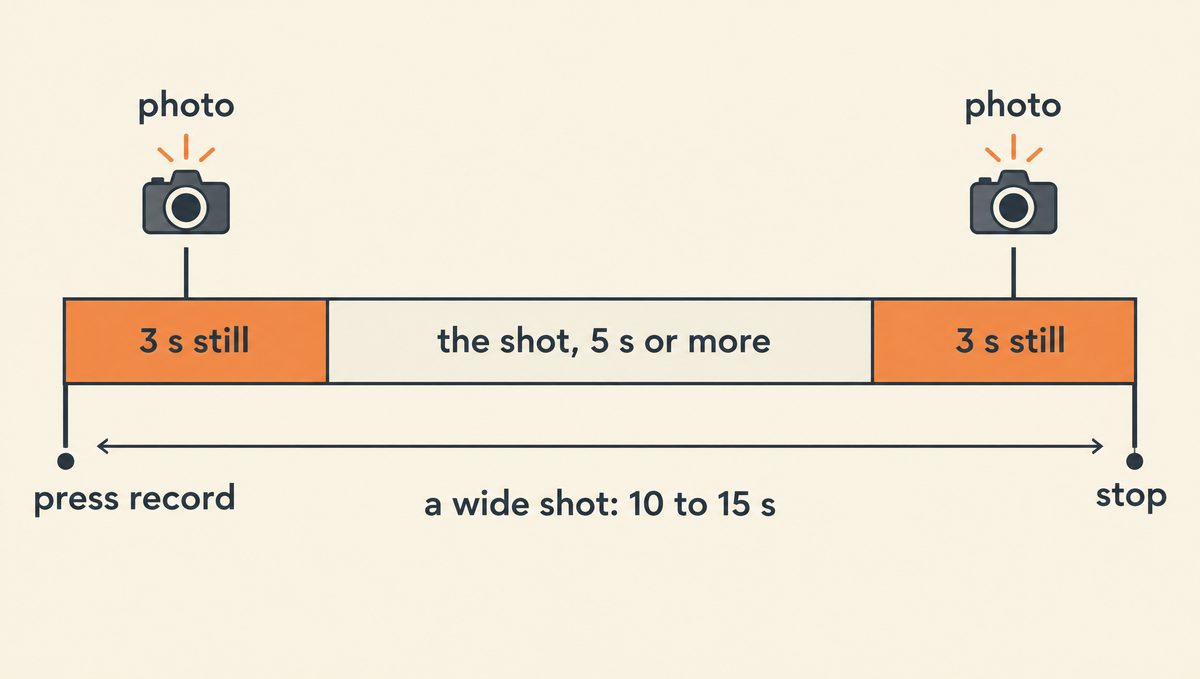 Hold still, count it.Wide shots 10 to 15 seconds. Every other B-roll shot 5 seconds at least. Dead still for 3 seconds at the start and the end: those still frames are the photos. The edit needs 3 to 5 clean seconds from the middle, and the first and last seconds are always a wobble.
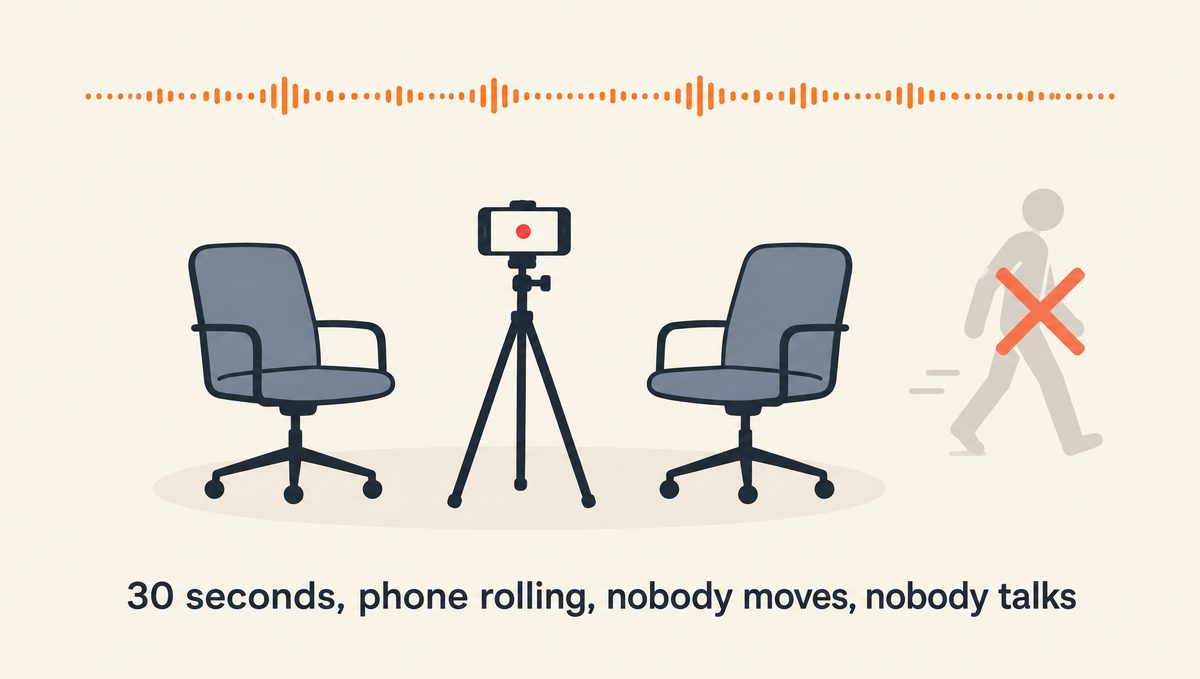 Record room tone.Thirty seconds of silence in the interview spot, phone rolling, nobody moving. The edit needs it to hide every cut.
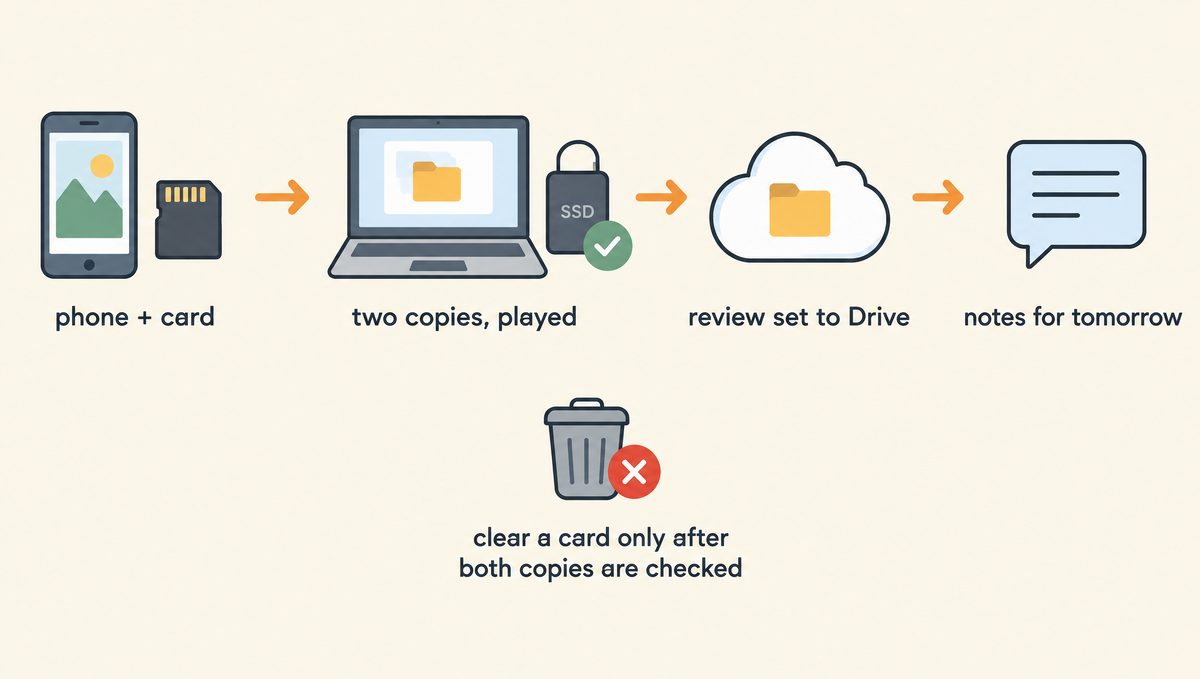 Two copies every night.Everything onto the laptop and the SSD before you sleep, two clips played from the SSD, counts matched. Only then is a card cleared. Then the review set into that day's Drive folder: the phone's interview take, the testimonial, ten B-roll clips. Joseph goes through it and sends notes for the next shop.